
Xiaoping Liang, Ph.D.
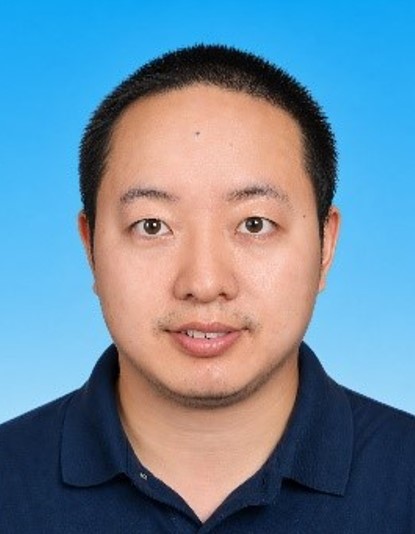
| Xiaoping Liang, Ph.D. Professor/ Principal Investigator Research Interest: Molecular mechanisms of the auditory system, neural circuit analysis, and gene therapy for hearing loss Email:skylxp23@smu.edu.cn |
Education
2012–2016 Ph.D., Institute of Biophysics, Chinese Academy of Sciences, China
2015 Visiting Scholar, Friedrich Miescher Institute for Biomedical Research (FMI), Switzerland
2009–2012 M.S., Hunan Normal University, China
2005–2009 B.S., Hunan Normal University, China
Professional Experience
2022–2026 Assistant Research Scientist (Junior Faculty), Johns Hopkins University, USA
2019–2020 Visiting Scholar, Columbia University, USA
2016–2022 Postdoctoral Fellow, Johns Hopkins University, USA
Research Overview
The human auditory system relies on precise molecular mechanisms and neural circuits to enable the perception, encoding, and transmission of sound, forming a fundamental basis for sensory information processing. However, the key molecular mechanisms underlying mechanotransduction in hearing, as well as the principles governing information flow within central auditory circuits, remain incompletely understood. Dysregulation of these processes is a major cause of hearing loss and related auditory disorders.
My research focuses on the coordinated regulation of molecular mechanisms and neural circuits in the auditory system. At the peripheral level, I investigate the function and regulatory mechanisms of mechanosensitive ion channels and their associated protein complexes in auditory transduction, and elucidate how deafness-associated mutations disrupt signal transduction. At the central level, I employ high-throughput connectomics approaches, such as MAPseq, to systematically map projection patterns of auditory neurons and uncover the organizational principles governing information distribution and integration across brain regions.
Building on these efforts, I further explore gene therapy strategies for restoring auditory function. This research aims to advance our understanding of auditory information processing from molecular to systems levels and to provide a theoretical foundation for precision interventions in hearing loss.
Our group is continuously recruiting postdoctoral fellows, Ph.D. students, and Master’s students. Outstanding candidates and young scholars are warmly welcome to join our team.
Selected Publications
1. Liang X, Pathak R, Qiu X, Dillard L, Twomey E, Müller U. Cryo-EM reveals a right-handed double-helix dimer architecture of PCDH15 critical for mechanotransduction. Proceedings of the National Academy of Sciences of the United States of America (PNAS), accepted/in press. Preprint available at bioRxiv, 2026. doi: https://doi.org/10.64898/2026.03.02.709101.
2. Kim H, Qi H, Washington C, Liang X, Kebschull JM. MAPseq2: a sensitive and cost-effective barcoded connectomics method. bioRxiv. 2025. doi: 10.1101/2025.06.23.661165
3. Qiu X, Liang X, Llongueras JP, Cunningham C, Müller U. The tetraspan LHFPL5 is critical to establish maximal force sensitivity of the mechanotransduction channel of cochlear hair cells. Cell Reports. 2023; 42(3): 112345. doi: 10.1016/j.celrep.2023.112345
4. Liang L†, Liang X†, Jiang P†, Zhou L†, Zhong L, Wang M, Lin S, Guo Z, Yu J, Yang C, Chen Y, Zhuo C, Chen P, Wang Y. Metastasis suppressor 1 interacts with α-actinin-4 to affect its localization and regulate formation of membrane ruffling. Cytoskeleton (Hoboken). 2021; 78(4): 174–186. doi: 10.1002/cm.21686
† co-first authors
5. Liang X†, Qiu X†, Dionne G†, Cunningham CL, Pucak ML, Peng G, Kim YH, Lauer A, Shapiro L, Müller U. CIB2 and CIB3 are auxiliary subunits of the mechanotransduction channel of hair cells. Neuron. 2021; 109(13): 2131–2149.e15. doi: 10.1016/j.neuron.2021.05.007
† co-first authors
6. Wang Y, Liu S, Sun L, Xu N, Shan S, Wu F, Liang X, Huang Y, Luk E, Wu C, Zhou Z. Structural insights into histone chaperone Chz1-mediated H2A.Z recognition and histone replacement. PLoS Biology. 2019; 17(5): e3000277. doi: 10.1371/journal.pbio.3000277
7. Dionne G, Qiu X, Rapp M, Liang X, Zhao B, Peng G, Katsamba PS, Ahlsen G, Rubinstein R, Potter CS, Carragher B, Honig B, Müller U, Shapiro L. Mechanotransduction by PCDH15 relies on a novel cis-dimeric architecture. Neuron. 2018; 99(3): 480–492.e5. doi: 10.1016/j.neuron.2018.07.006
8. Liang X†, Shan S†, Pan L†, Zhao J†, Ranjan A, Wang F, Zhang Z, Huang Y, Feng H, Wei D, Huang L, Liu X, Zhong Q, Lou J, Li G, Wu C, Zhou Z. Structural basis of H2A.Z recognition by SRCAP chromatin-remodeling subunit YL1. Nature Structural & Molecular Biology. 2016; 23(4): 317–323. doi: 10.1038/nsmb.3190
† co-first authors
9. Mao Z, Pan L, Wang W, Sun J, Shan S, Dong Q, Liang X, Dai L, Ding X, Chen S, Zhang Z, Zhu B, Zhou Z. Anp32e, a higher eukaryotic histone chaperone, directs preferential recognition for H2A.Z. Cell Research. 2014; 24(4): 389–399. doi: 10.1038/cr.2014.30
10. Shi N†, Tian C†, Liang X†, Jiang P, Liang L, Zhou L, Shu Y, Chen P, Wang Y. Proteome analysis of actin filament-associated proteins in the postnatal rat cerebellum. Neuroscience. 2012; 227: 90–101. doi: 10.1016/j.neuroscience.2012.09.050
† co-first authors

