
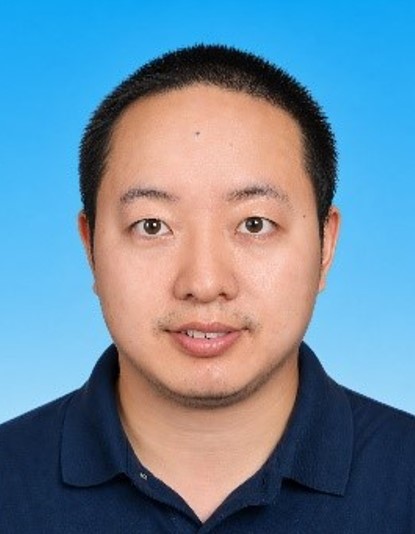
梁小平 博士
| 梁小平 博士 教授 / 研究组长 研究方向:听觉系统分子机制、神经环路解析与耳聋基因治疗研究 电子邮箱:skylxp23@smu.edu.cn |
教育经历
2012年-2016年,中国科学院生物物理研究所,博士
2015年,瑞士Friedrich Miescher生物医学研究所(FMI),访问学者
2009年-2012年,湖南师范大学,硕士
2005年-2009年,湖南师范大学,学士
工作经历
2022年-2026年,美国约翰霍普金斯大学,助理研究员(Junior Faculty)
2019年-2020年,美国哥伦比亚大学,访问学者
2016年-2022年,美国约翰霍普金斯大学,博士后
研究概述
人类听觉系统依赖精密的分子机制与神经环路实现声音信号的感知、编码与传递,是感觉信息处理的重要基础。然而,听觉感觉转导的关键分子机制及其在中枢神经系统中的信息传递规律仍有待系统阐明,其异常是耳聋等听觉障碍发生的重要原因。
本人围绕听觉系统“分子机制—神经环路”协同调控的科学问题开展研究。在外周层面,重点解析机械力敏感通道及其相关蛋白复合物在听觉感觉转导中的功能及调控机制,阐明致聋突变对信号转导过程的影响;在中枢层面,结合MAPseq等高通量神经连接组学技术,系统解析听觉相关神经元的投射模式及其组织原则,揭示听觉信息在不同脑区间的分布与整合规律。
在此基础上,进一步探索基因治疗等策略在听觉功能修复中的应用潜力。相关研究有助于从分子到系统层面深化对听觉信息处理机制的认识,并为耳聋等听觉障碍的精准干预提供理论基础。
课题组长期招收博士后、博士研究生和硕士研究生,欢迎优秀考生及青年学者加入我们的团队!
代表性文章
1. Liang X, Pathak R, Qiu X, Dillard L, Twomey E, Müller U. Cryo-EM reveals a right-handed double-helix dimer architecture of PCDH15 critical for mechanotransduction. Proceedings of the National Academy of Sciences of the United States of America (PNAS), accepted/in press. Preprint available at bioRxiv, 2026. doi: https://doi.org/10.64898/2026.03.02.709101.
2. Kim H, Qi H, Washington C, Liang X, Kebschull JM. MAPseq2: a sensitive and cost-effective barcoded connectomics method. bioRxiv. 2025. doi: 10.1101/2025.06.23.661165
3. Qiu X, Liang X, Llongueras JP, Cunningham C, Müller U. The tetraspan LHFPL5 is critical to establish maximal force sensitivity of the mechanotransduction channel of cochlear hair cells. Cell Reports. 2023; 42(3): 112345. doi: 10.1016/j.celrep.2023.112345
4. Liang L†, Liang X†, Jiang P†, Zhou L†, Zhong L, Wang M, Lin S, Guo Z, Yu J, Yang C, Chen Y, Zhuo C, Chen P, Wang Y. Metastasis suppressor 1 interacts with α-actinin-4 to affect its localization and regulate formation of membrane ruffling. Cytoskeleton (Hoboken). 2021; 78(4): 174–186. doi: 10.1002/cm.21686
† co-first authors
5. Liang X†, Qiu X†, Dionne G†, Cunningham CL, Pucak ML, Peng G, Kim YH, Lauer A, Shapiro L, Müller U. CIB2 and CIB3 are auxiliary subunits of the mechanotransduction channel of hair cells. Neuron. 2021; 109(13): 2131–2149.e15. doi: 10.1016/j.neuron.2021.05.007
† co-first authors
6. Wang Y, Liu S, Sun L, Xu N, Shan S, Wu F, Liang X, Huang Y, Luk E, Wu C, Zhou Z. Structural insights into histone chaperone Chz1-mediated H2A.Z recognition and histone replacement. PLoS Biology. 2019; 17(5): e3000277. doi: 10.1371/journal.pbio.3000277
7. Dionne G, Qiu X, Rapp M, Liang X, Zhao B, Peng G, Katsamba PS, Ahlsen G, Rubinstein R, Potter CS, Carragher B, Honig B, Müller U, Shapiro L. Mechanotransduction by PCDH15 relies on a novel cis-dimeric architecture. Neuron. 2018; 99(3): 480–492.e5. doi: 10.1016/j.neuron.2018.07.006
8. Liang X†, Shan S†, Pan L†, Zhao J†, Ranjan A, Wang F, Zhang Z, Huang Y, Feng H, Wei D, Huang L, Liu X, Zhong Q, Lou J, Li G, Wu C, Zhou Z. Structural basis of H2A.Z recognition by SRCAP chromatin-remodeling subunit YL1. Nature Structural & Molecular Biology. 2016; 23(4): 317–323. doi: 10.1038/nsmb.3190
† co-first authors
9. Mao Z, Pan L, Wang W, Sun J, Shan S, Dong Q, Liang X, Dai L, Ding X, Chen S, Zhang Z, Zhu B, Zhou Z. Anp32e, a higher eukaryotic histone chaperone, directs preferential recognition for H2A.Z. Cell Research. 2014; 24(4): 389–399. doi: 10.1038/cr.2014.30
10. Shi N†, Tian C†, Liang X†, Jiang P, Liang L, Zhou L, Shu Y, Chen P, Wang Y. Proteome analysis of actin filament-associated proteins in the postnatal rat cerebellum. Neuroscience. 2012; 227: 90–101. doi: 10.1016/j.neuroscience.2012.09.050
† co-first authors
上一条:王本驰 博士

